Posts

Blog # 429 Building Osprey Platforms
Image
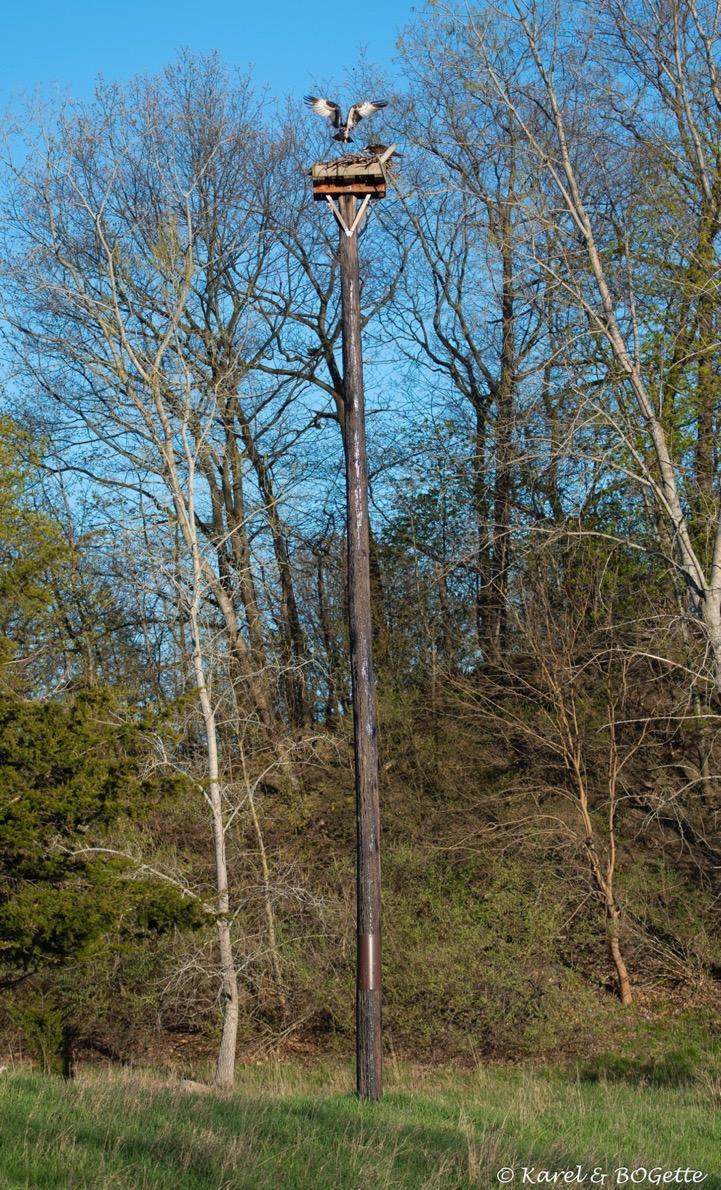
Osprey pair at Salmon Creek a pole put up by NYSEG, courtesy of Cindy Sedlacek NYSEG has been invaluable putting up Osprey nesting platforms around the Cayuga Lake Basin. However, we need more platforms in the specific places Ospreys want to nest, not in places we think they will nest (prospecting nests). The Cayuga Lake Osprey Network promotes the conservation of Osprey in the Finger Lakes. To that end, we are erecting Osprey platforms to accommodate our growing Osprey population. If you live near the lake and you would like an osprey platform on your property, contact the Cayuga Lake Osprey Network at cec222@gmail.com. Nest Platform Design for Osprey Osprey readily nest on nesting platforms designed especially for them and are an important tool in reestablishing populations. Seventy years ago, Ospreys mainly nested in trees. Now they have switched to using artificial structures which are strong and less likely to fall.  Ideally, nesting platforms should be erected in open water t...

Blog # 428 Building Osprey Platforms: principals, placement, and designs

Image
A pair of mated Ospreys take a break from nest building, courtesy of Cindy Sedlacek. The proliferation of artificial nesting platforms across the US has been instrumental in helping Ospreys recover from near-extinction caused by DDT. By providing breeding habitat at this critical recovery time, Ospreys were welcomed back to the Atlantic seaboard and the northeast. Artificial nesting platforms provide safe places for Ospreys to raise their young and have proven to be more stable than most natural nesting sites. To ensure that a breeding pair adopts a newly built platform it must be built properly and located at a site conducive to Ospreys. Please keep the following considerations in mind when building and erecting an Osprey nest platform: • Proximity to Water: Site the platform within a few miles of an uncontaminated body of water body having shallow areas and plenty of fish. • Build in the Open: Erect the platform in an open area with clear views of the surroundings. Trees less than 10...

Blog #427 How to Enjoy Osprey Watching

Image
  Orpheus flying in the snow at Salt Point, courtesy of Cindy Sedlacek . Many of the breeding Ospreys have returned to their nests in the Cayuga Lake Basin, although a few mates and pairs are still on their way north. In general, the older breeding males arrive first followed by their mates. After that wave, unmated adults called floaters or intruders and second year birds, migrating north for the first time, will join them to fill in empty nests and replace lost mates.   To get the greatest enjoyment watching an Osprey family, learn about their life  history and the stages they go through during their breeding season. This is simple as they nest in the open and are large enough to observe from a respectful distance of 300 feet. Find a nest you would like to observe from the Cayuga Lake Osprey Trail and plan to visit it at least once a week if not more and record the important events listed below. Once the chicks hatch, they mature before your eyes.    I. Arriv...

Blog # 426 How to Spot an Ospreys

Image
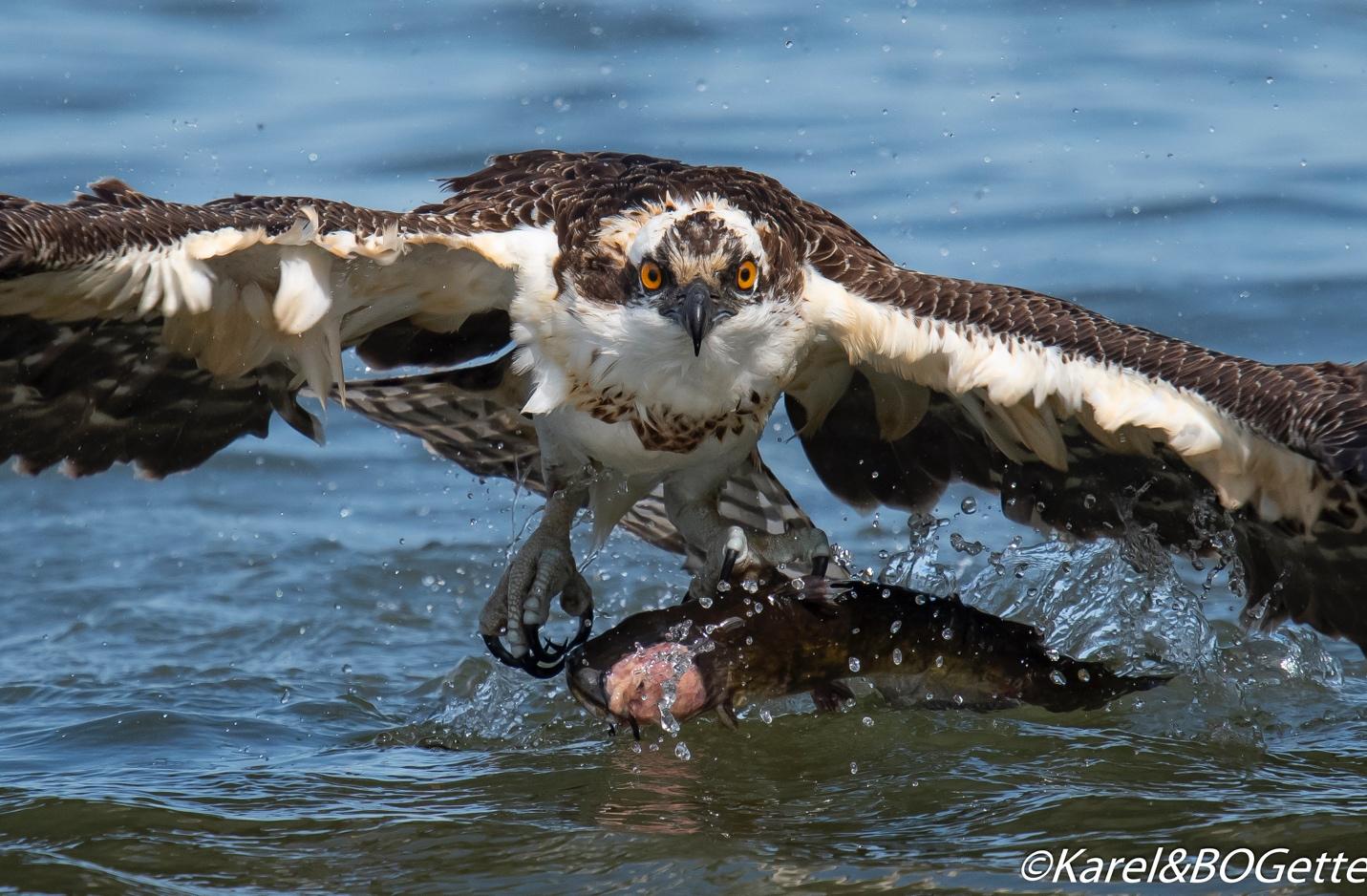
  Fledgling female Osprey with a catfish, courtesy of Cindy and Karel Sedlacek. The Osprey ( Pandion haliaetus ) is unmistakable when flying across Cayuga Lake with crooked-wings and when performing its spectacular plunge dive after fish. Yet this graceful apex predator is often confused with a few local look-alikes.  AVIAN DOPPELGĂ„NGERS Many birders have trouble identifying Ospreys in flight when they only get a glimpse of a moving bird without time to note field marks. Ospreys are often confused with bald eagles, red-tail hawks, and large gulls. Second-year bald eagles are often mistaken for Ospreys, especially when they are testing out an Osprey nest early in the year. Depending on their position and the lighting, the eagle’s undersides can easily resemble that of an Osprey except for two features—the feet and wingspread. The eagle’s feet are bright yellow compared to the Osprey’s white feet with dark talons. More noticeable is the size difference between the species. Alth...